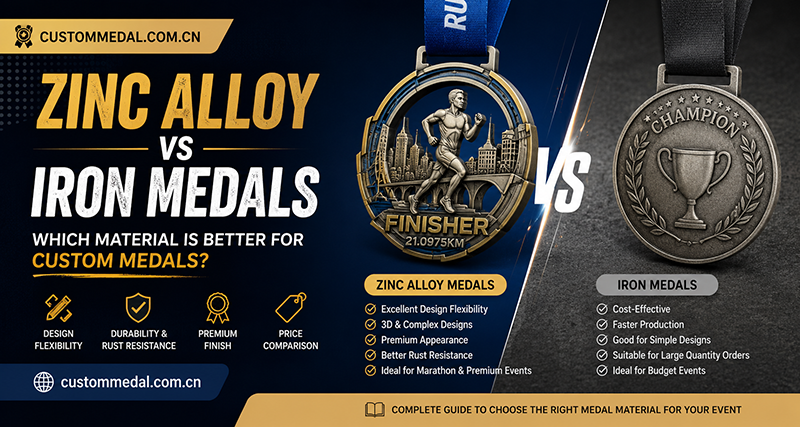
Zinc Alloy vs Iron Medals: Which Material Is Better for Custom Medals?
When creating custom medals for marathons, sports events, corporate awards, or school competitions, choosing the right metal material is one of the most important decisions. Two of the most popular options in the medal manufacturing industry are zinc alloy medals and iron medals.
But which one is better?
In this guide, we will compare zinc alloy vs iron medals in terms of quality, durability, weight, design flexibility, plating, pricing, and best use cases — helping you choose the perfect material for your next custom medal project.
What Are Zinc Alloy Medals?
Zinc alloy medals are made using a die-casting process. Molten zinc alloy metal is injected into a mold, allowing manufacturers to create highly detailed and complex medal designs.
Because of their flexibility and premium appearance, zinc alloy medals are widely used for:
- Marathon medals
- Cycling medals
- Triathlon medals
- Corporate awards
- 3D medals
- Cut-out medals
- Antique finish medals
Advantages of Zinc Alloy Medals
1. Excellent Design Flexibility
Zinc alloy is ideal for:
- Hollow designs
- 3D structures
- Multi-layer medals
- Irregular shapes
- Spinner medals
- Bottle opener medals
The material can easily produce detailed textures and creative shapes that are difficult to achieve with iron.
2. Premium Appearance
Zinc alloy medals often have a smoother and more refined surface finish, making them look more luxurious and professional.
Popular finishes include:
- Shiny gold
- Matte gold
- Antique silver
- Antique bronze
- Black nickel
- Dual plating
3. Better for Large Medals
For oversized marathon medals or heavy challenge medals, zinc alloy is usually preferred because it supports thicker and more complex designs without deformation.
4. Strong Corrosion Resistance
Zinc alloy generally offers better resistance against rust and oxidation compared to iron medals.
What Are Iron Medals?
Iron medals are manufactured using a stamping process. A metal sheet is pressed with a mold to create the medal design.
Iron medals are commonly used for:
- Budget sports medals
- School event medals
- Promotional medals
- Simple award medals
- Large quantity orders
Advantages of Iron Medals
1. Lower Production Cost
Iron is one of the most cost-effective materials for custom medals, especially for simple flat designs.
If you need affordable custom medals in bulk, iron medals are an excellent option.
2. Faster Production
Since iron medals use a stamping method, production is generally faster for standard designs.
3. Good for Simple Designs
For 2D logos, text-only medals, or basic event medals, iron can still achieve a clean and professional appearance.
Zinc Alloy vs Iron Medals: Key Differences
| Feature | Zinc Alloy Medals | Iron Medals |
|---|---|---|
| Manufacturing Process | Die Casting | Stamping |
| Design Complexity | Excellent | Limited |
| 3D Capability | Strong | Moderate |
| Hollow Cut-Out Designs | Excellent | Difficult |
| Surface Finish | Smooth & Premium | Standard |
| Rust Resistance | Better | Lower |
| Production Cost | Higher | Lower |
| Weight | Heavier Feel | Lighter |
| Best for | Premium Medals | Budget Medals |
Which Medal Material Is Better for Marathon Medals?
For marathon medals, zinc alloy is usually the preferred choice because marathon organizers often want:
- Large medal sizes
- Unique shapes
- Hollow designs
- 3D effects
- High-end appearance
Many modern marathon medals include moving parts, spinning centers, layered structures, or detailed landmarks — all easier to produce with zinc alloy.
Iron medals are more suitable for budget-friendly races or simple participation medals.
Which Material Lasts Longer?
Zinc alloy medals generally have better long-term durability because they resist rust more effectively.
Iron medals can rust over time if the plating becomes damaged or exposed to moisture.
For outdoor events or medals intended as collectibles, zinc alloy is often the safer option.
Price Comparison: Zinc Alloy vs Iron Medals
Iron Medal Pricing
Iron medals are typically cheaper because:
- Material cost is lower
- Production process is simpler
- Faster manufacturing speed
Iron medals are ideal for:
- Schools
- Community sports events
- Charity runs
- Budget tournaments
Zinc Alloy Medal Pricing
Zinc alloy medals cost more because:
- Production is more detailed
- Molds are more complex
- Material density is higher
However, the premium look often justifies the investment for high-profile events.
How to Choose the Right Medal Material
Choose Zinc Alloy If You Need:
- Premium custom medals
- Complex shapes
- 3D medal designs
- Hollow cut-outs
- Antique finishes
- Large marathon medals
- Long-lasting quality
Choose Iron If You Need:
- Low-cost medals
- Fast production
- Simple 2D designs
- High quantity orders
- School or local event medals
Final Thoughts
Both zinc alloy and iron medals have their own advantages, and the best choice depends on your event goals, design complexity, and budget.
If you want premium-quality custom medals with detailed artwork and modern creative features, zinc alloy medals are the best option.
If your priority is affordability and large-volume production, iron medals remain a practical and reliable choice.
For many event organizers, the decision comes down to balancing budget with visual impact.